Ramla: The Connected Script Font for Seamless Craft
There is a specific kind of frustration that every designer and crafter knows well. You find a beautiful script font, one that looks perfect on screen, but the moment you try to cut it with a laser, a CNC machine, or even a vinyl cutter, the letters fall apart. The cutter traces each individual letter, leaving you with a jumbled pile of disconnected shapes instead of a cohesive word. This is where Ramla changes the game. It is an elegant, connected script font designed specifically to bridge the gap between digital beauty and physical production. With its two weights and a design that ensures every lowercase and uppercase letter flows into the next, Ramla is built to create clean, continuous lines, making it a standout choice for modern typography that needs to be made into a tangible object.
The Practical Elegance of a Truly Connected Typeface
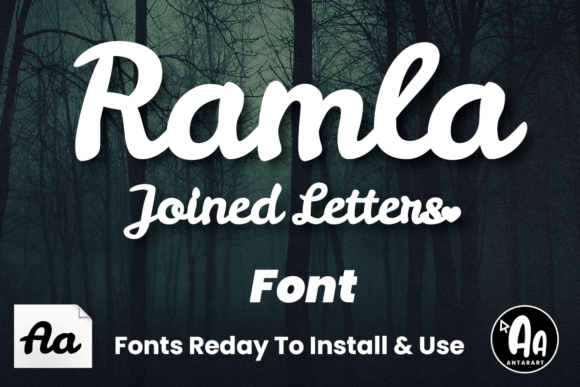
At its core, Ramla is a display font with a distinct personality. It carries the warmth of a handwritten font but with the refined control of a professional typeface. The visual style is smooth and flowing, with letters that are thoughtfully joined to create a single, unbroken path. This isn't just an aesthetic choice; it's a functional one. The font is based on the open-source Leckerli One, but it has been meticulously edited to be wholly joined. This means that when you type "Ramla," you get one continuous line, not six separate characters. This characteristic is critical for projects involving laser cutting, engraving, or any CNC-based fabrication. The machine follows a single, smooth vector path, resulting in cleaner cuts, reduced production time, and a more professional final product.
Beyond the workshop, this connected style brings a unique visual cohesion to any project. In logo design, a connected script like Ramla can instantly convey approachability, creativity, and a personal touch. It feels more organic and human than a standard sans serif font, yet it maintains enough structure to be versatile. The two available weights provide flexibility. The regular weight offers a delicate, elegant feel perfect for wedding invitations or boutique branding, while the bold weight adds presence and impact, making it suitable for headlines, posters, and packaging design where you need the text to stand out. This duality allows Ramla to adapt to different contexts without losing its core character.
Where Ramla Truly Shines: From Brand Identity to Physical Products
Understanding a font's strengths is key to using it effectively. Ramla excels in projects where the text is the focal point and needs to feel personal, connected, and crafted. Its design makes it a powerful creative font for a wide range of applications.
For entrepreneurs and small business owners building a brand identity, Ramla can be a cornerstone. Imagine a coffee shop using it for their logo, menu headers, and the branding on their takeaway cups. The connected script creates a consistent, welcoming vibe that customers will recognize. It works beautifully for product-based businesses, especially in niches like artisan goods, floristry, bakeries, and cosmetics, where a touch of elegance and handcraft is part of the brand story. It’s a premium font that doesn't look generic, helping a brand stand out in a crowded market.
In the world of editorial design and publishing, Ramla is perfect for titles and pull quotes in magazines, blogs, or book covers. It draws the reader's eye and adds a layer of sophistication that a standard serif font might not achieve. For social media graphics, it can make a post feel more curated and intentional, whether you're announcing a sale, sharing a testimonial, or creating a quote graphic. The font's inherent flow guides the viewer's eye across the text, improving engagement and making the message more memorable.
Of course, its most unique application is in physical products. Crafters and hobbyists can use Ramla to create stunning wooden signs, acrylic jewelry, custom cake toppers, and personalized home decor. The fact that it is compatible with laser cutting machines means you can move from a digital design to a physical item with confidence, knowing the integrity of the letterforms will be preserved. This makes it an invaluable design asset for anyone selling on platforms like Etsy or running a small custom workshop.
Practical Guidance for Using Ramla in Your Projects
Choosing the right font is only half the battle; using it well is the other. Here’s how to get the most out of Ramla.
- Evaluate Project Fit: Ask yourself if your project needs a personal, connected feel. Ramla is a script font, so it's not ideal for long body text where readability at small sizes is paramount. Instead, use it for headlines, logos, short phrases, and calls to action where its style can be fully appreciated.
- Master the Font Pairing: A great font pairing creates balance and hierarchy. Ramla, being expressive, pairs best with a clean, simple companion. Try combining it with a neutral sans serif font like Montserrat or Lato for body text. This contrast allows Ramla's personality to shine without overwhelming the design. For a more classic look, a simple, modern serif font like Lora could also work well.
- Test for Readability: Always test your text at the intended size and on the intended medium. A word that looks clear on your computer screen might need more spacing when engraved on wood. Zoom in to check the connections between letters, especially for intricate uppercase combinations, to ensure they will cut cleanly.
- Review the Included Styles: Remember that Ramla comes with two weights. Don't just default to one. The bold weight might be perfect for a strong logo, while the regular weight could be more suitable for elegant, subtle packaging. Experiment to see which best fits your project's tone.
- Understand the Licensing: Since Ramla is based on an open-source font but has been significantly edited, it is a commercial font. Always check the specific license provided with your purchase. For most standard commercial uses—like on products you sell, in client logos, or in marketing materials—it will be covered. However, for large-scale distribution or specific applications, verifying the terms is a professional best practice.
Ultimately, Ramla is more than just a collection of letters. It’s a problem-solving tool for the modern creative. It understands that in today’s world, design often lives in both pixels and physical spaces. By providing a reliable, beautiful, and truly connected script, it empowers designers, crafters, and entrepreneurs to bring their most personal and ambitious ideas to life, from the first sketch on a screen to the final, tangible product in their hands. It’s a typeface built for the reality of making things, and that practical elegance is what makes it so valuable.